A delivery fee answers a commercial question. A delivery plan answers a physical one: can this crew, with this equipment, move this building to the agreed location?
The archive’s delivery chapter describes distance-based pricing, scheduling, and proof of completion. Those are useful records, but none replaces an access review.
Separate pricing distance from the route
A dealer may price by radius, road distance, or a custom service area. State which rule the quote uses.
A straight-line calculation is not a truck route. It does not account for bridge restrictions, turns, grades, overhead obstacles, or equipment limits. An address geocoder identifies a place; it does not establish a workable final approach.
Preserve the quoted assumption and the actual route review as separate information.
Confirm the entire approach
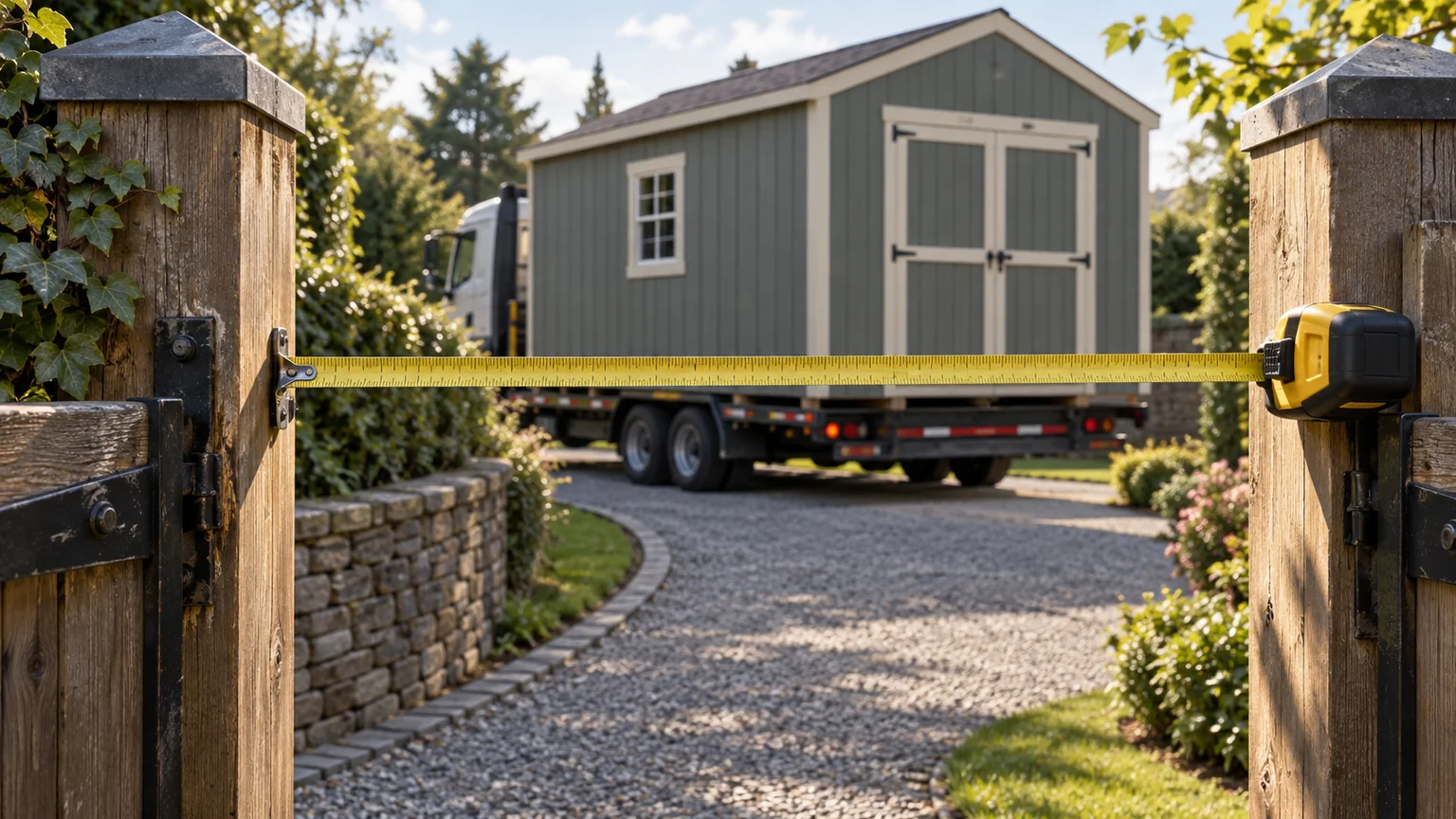
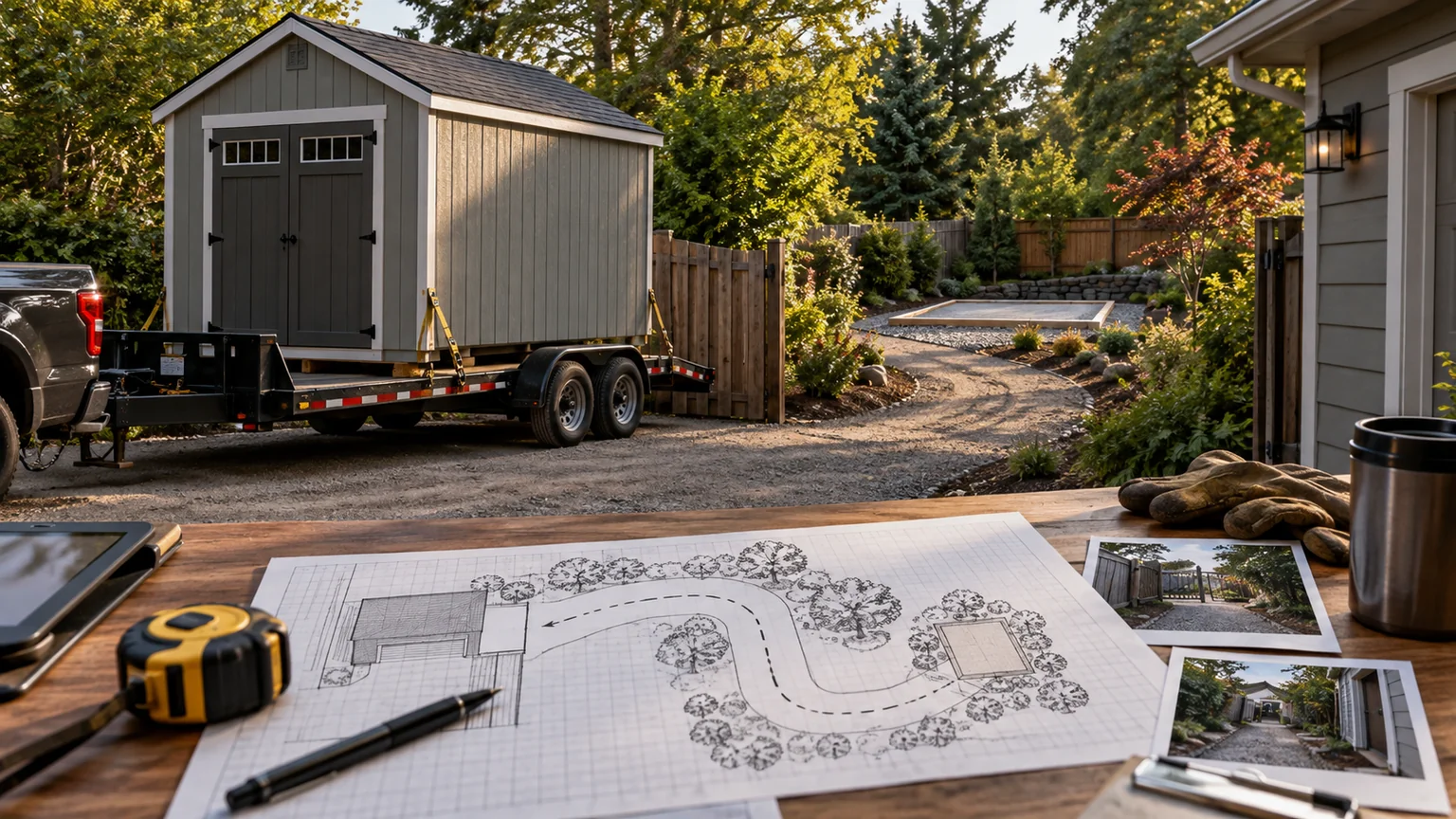
Review access from the road to the final placement. The narrowest gate may not be the only constraint. A turn beyond it, a soft shoulder, an overhang, or a sloped stopping point can change the plan.
Document the measurements and photographs the delivery team needs. Have the team responsible for the move determine the required clearance and equipment. The gate story explains why waiting until arrival is expensive.
Use our delivery checklist to organize a conversation. It is a planning aid, not a crew’s approval of a particular move.
Make site readiness an explicit handoff
Agree on the placement location, preparation responsibilities, and the condition the site must be in before arrival. Record any required follow-up and who owns it.
Confirm readiness near the scheduled date. Weather, parked vehicles, landscaping, or construction work can change conditions after the original survey.
If readiness is uncertain, show that uncertainty in the schedule. A calendar entry should not conceal a dependency that can stop the delivery.
Schedule with real constraints
Match the building to the equipment and the crew. Include travel, setup, placement, and reasonable contingency in the plan.
Tell the customer how arrival will be communicated and what they need to make available. When a delay occurs, update the estimate and explain the next decision.
A status message should represent a verified transition. “Out for delivery” and “completed” should not be interchangeable labels chosen for convenience.
Close the loop
At completion, record the delivered revision, placement, relevant condition photographs, and any remaining work. Handle location data and customer images with appropriate access.
A completion record does not erase an unresolved issue. Keep exceptions visible, assign ownership, and provide the customer a practical support route.
Good delivery software helps people coordinate the move. The final measure is whether the building reaches the agreed place with the work and remaining responsibilities understood.
Keep a good idea close.
Follow ForgeWorks